
GI Wedge Anchor Fasteners – Applications, Types and Selection Tips
Introduction
Fasteners play an important role in construction, installation, and industrial assembly. When components need to be secured to concrete, the appropriate anchoring system helps establish a reliable connection between the fixture and the supporting structure. GI wedge anchor fasteners are one category of mechanical anchors used for suitable concrete-fixing applications.
Selecting the right anchor requires more than checking its length or appearance. Factors such as substrate condition, anchor dimensions, material specifications, installation depth, and loading requirements must all be considered.
Prime Enterprises offers GI wedge anchor fasteners and accepts enquiries regarding product specifications, stock availability, manufacturing, and dispatch arrangements.
What Are GI Wedge Anchor Fasteners?
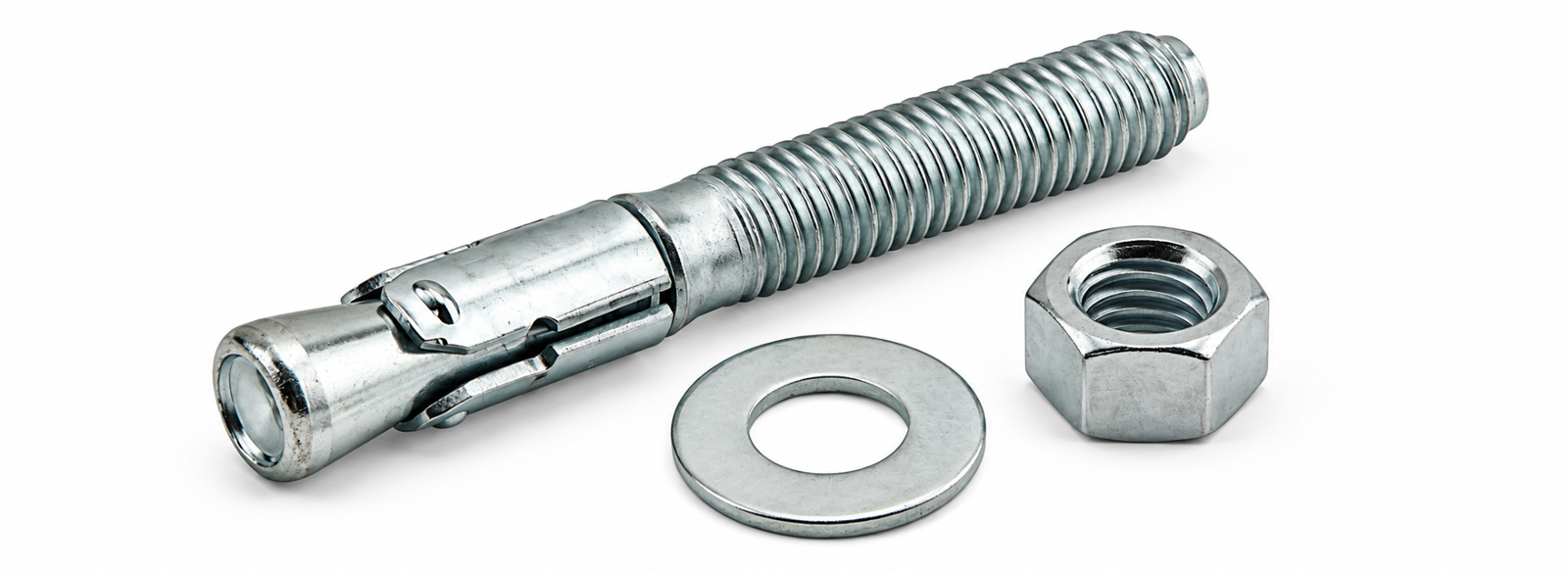
Wedge anchor fasteners are mechanical anchoring components designed to secure compatible fixtures to suitable concrete substrates. A typical wedge anchor consists of a threaded steel shaft, an expansion clip or sleeve near the lower end, and a nut and washer.
During installation, the anchor is inserted into a correctly prepared hole. Tightening the nut according to the manufacturer’s instructions draws the anchor into its expansion mechanism, pressing the expansion component against the surrounding concrete.
The term GI generally refers to galvanised iron or galvanised steel in common hardware usage. However, the exact base material and protective coating should be confirmed from the product specification rather than assumed from the abbreviation alone.
How Do Wedge Anchors Work?
A wedge anchor uses a mechanical expansion mechanism to develop an anchoring connection in an appropriate substrate.
The installer first drills a hole to the specified diameter and depth. The hole must be prepared according to the manufacturer’s instructions, including any required cleaning. The anchor is then inserted to the specified embedment depth.
When the nut is tightened as directed, the expansion mechanism engages with the surrounding concrete. This creates resistance to movement, subject to the anchor design, substrate properties, installation conditions, and applied loads.
Not every wedge anchor is suitable for every substrate or loading condition. Product documentation should always be checked before selecting an anchor for a particular application.
Common Applications of Wedge Anchor Fasteners
Depending on the product’s design, approval, and load rating, wedge anchors may be used in various fixing applications.
1. Brackets and Supports
Suitable anchors can be used to attach compatible brackets and supports to concrete surfaces. The anchor must be selected according to the bracket design, load, and substrate conditions.
2. Equipment Mounting
Certain approved anchors may be used to secure equipment supports or mounting fixtures to concrete. Applications involving vibration, dynamic loads, or heavy equipment require careful engineering assessment.
3. Construction and Installation Work
Contractors and installers may use mechanical anchors for compatible fixtures and structural accessories. The selection should account for the intended load and the requirements of the project.
4. General Fixing Requirements
Wedge anchors can be useful in suitable concrete-fixing situations where a mechanical expansion anchor is specified. They should not be substituted for another anchor type without confirming suitability.
Important Factors When Selecting GI Wedge Anchors
Anchor Diameter and Length
Diameter and length affect the fit and installation requirements. Customers should check the specified diameter, overall length, effective embedment depth, and fixture thickness.
A longer anchor is not automatically better. The dimensions must match the product specification and the requirements of the intended application.
Base Material
Wedge anchors are generally intended for suitable concrete applications. Concrete strength, condition, thickness, cracking, and proximity to edges can affect performance.
They should not be assumed suitable for brick, hollow block, aerated concrete, or other substrates unless the manufacturer specifically approves the anchor for that use.
Material and Corrosion Protection
The base metal and protective coating should be appropriate for the installation environment. Outdoor exposure, humidity, industrial atmospheres, and contact with other materials may affect corrosion behaviour.
The exact coating and environmental suitability should be confirmed before purchasing galvanised anchors for exposed installations.
Load Requirements
The required tensile and shear capacities depend on the applied loads, anchor spacing, embedment, concrete characteristics, and other design factors.
Critical, overhead, structural, or safety-related applications should be designed or reviewed by a qualified professional using the relevant technical documentation.
Installation Requirements
Hole diameter, drilling depth, cleaning, embedment, edge distances, spacing, and tightening procedure all matter. Follow the manufacturer’s instructions and use the specified tools and installation method.
Common Mistakes to Avoid
One mistake is selecting an anchor based only on its price or physical size. Two anchors of similar appearance may have different materials, coatings, dimensions, and load ratings.
Another mistake is using a wedge anchor in an unsuitable substrate. Mechanical expansion anchors rely on the interaction between the anchor and the surrounding material, so the substrate must be compatible with the product.
Incorrect hole preparation, insufficient embedment, improper tightening, or inadequate spacing can also compromise an installation. These factors should be addressed through correct product selection and professional installation.
Storage and Product Handling
Fasteners should be stored in a clean, dry environment appropriate to their coating and material. Keep different sizes and specifications clearly identified to avoid mixing products during storage or dispatch.
Before installation, inspect anchors for visible damage, deformation, contamination, or coating deterioration. Damaged or questionable components should be assessed against the manufacturer’s acceptance criteria.
GI Wedge Anchor Fasteners at Prime Enterprises
Prime Enterprises offers GI wedge anchor fasteners for customers seeking suitable anchoring products for their projects. The company also accepts enquiries regarding stock availability, specifications, manufacturing, and dispatch.
Before placing an order, customers should confirm the required diameter, length, material, coating, quantity, and intended application. Providing these details helps clarify the product requirements and makes enquiries more efficient.
For specialised or safety-critical applications, confirm the anchor’s technical documentation and suitability with the manufacturer or a qualified professional.
Conclusion
GI wedge anchor fasteners are useful mechanical anchoring components for appropriate concrete-fixing applications. Their suitability depends on the correct product specification, compatible substrate, appropriate installation procedure, and verified load requirements.
Understanding these factors helps customers select anchors more responsibly and avoid common purchasing and installation mistakes.
Call to Action: Contact Prime Enterprises to enquire about GI wedge anchor fasteners, specifications, stock availability, and dispatch arrangements.


Add a comment